
Real valving.
Stock forks.
4-way adjustable compression and rebound damping for the Yamaha MT-07, FZ-07 and FZ6.
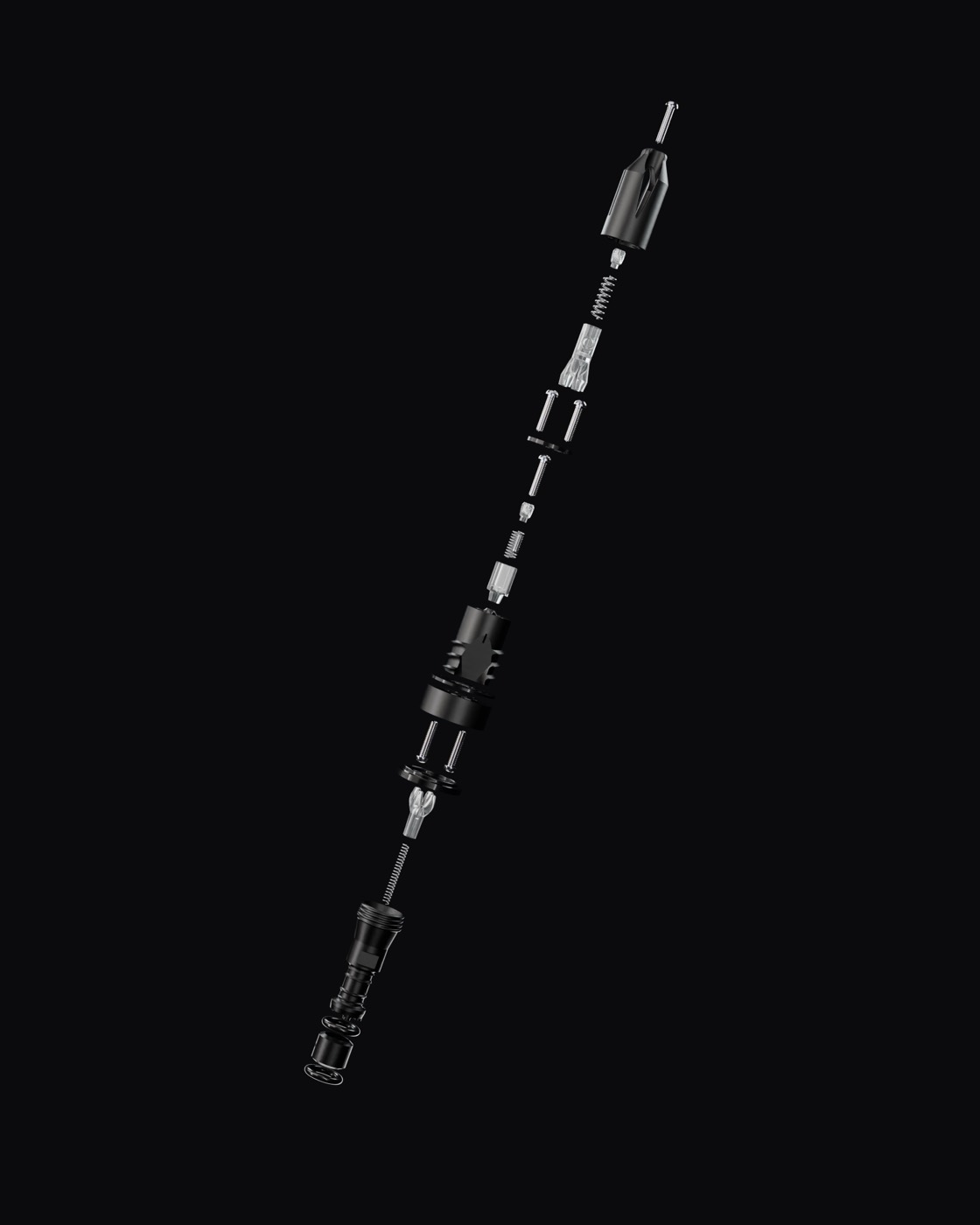
Made where machining can't reach.
The internal oil passages can't be cut on a lathe, so Prime is printed from engineering-grade filament, then heat-treated to survive the heat and pressure inside a fork.
Rebound, built in.
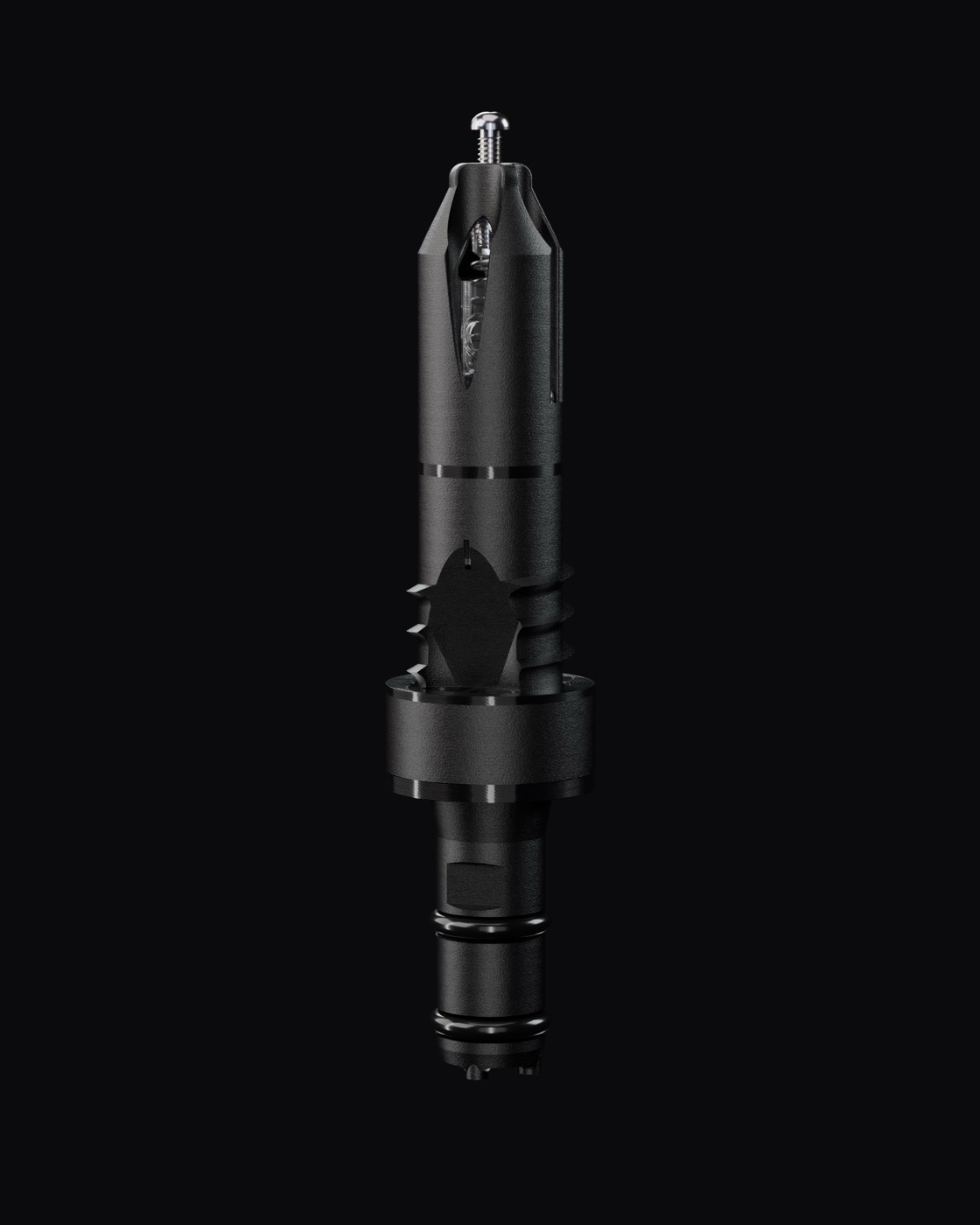
Prime reaches down into the damper rod. Twist the collar to set how fast the fork returns, so there's no pogo after a bump.
Threads onto your stock spring.
Open the fork cap, thread Prime on, drop it back in. About 20 minutes. Forks stay on the bike. Stock oil.
Two circuits.
Every stroke.
Oil takes its own path in each direction: compression on the way in, rebound on the way out. The inset shows which one you're watching.
Brake hard, it holds.
Hit a pothole, it opens.
Slow fork movement keeps the valve shut, so the front stays up under braking. Sharp hits blow it open, so the bump never reaches your hands.
Tune every circuit.
- Low-speedBraking dive and mid-corner support
- High-speedHow hard potholes and curbs hit
- Hi/Lo biasWhen the firmer damping kicks in
- ReboundHow fast the fork returns
More than a piece of plastic.
Two valving circuits, four adjusters and a rebound collar in one part. Yet only the top cap moves to tune it, and the only wear parts are the O-rings on the bottom: $12 a kit, two changes per kit.
$250.
Twenty minutes to a new front end.
Fits every MT-07 and FZ-07 through 2024, plus the FZ6. Free shipping in the USA.
Why not heavier oil?
Heavier oil stiffens everything.
Prime stiffens the right things.
Stock forks push oil through a few fixed holes: too soft when the fork moves slowly, too harsh when it moves fast. Thicker oil just shifts the problem. Try a heavier oil in the stock fork, then compare Prime.
Illustrative shape, relative units. The numbers in the corner are the total area under each curve (damping force × fork speed, in N·m/s), so compare them with each other, not their size. Screws are counted in turns out from fully in: fewer turns is firmer. Prime's adjuster effects follow the Impulse physics sim. Try it in the simulator ›
Under the hood
Each screw changes one thing.
Simulated on a stock MT-07 fork, Medium preset, each adjuster turned on its own. The changes land where they should and leave the rest of the stroke alone.
Four adjusters, three presets
Start with a preset. Tune from there.
Every adjuster turns with a screwdriver, with the fork on the bike. Screws are counted in turns out from fully in, so fewer turns is firmer.
| Preset | High-speed | Low-speed | Hi/Lo bias | Rebound |
|---|---|---|---|---|
| Soft / Comfort | 5.5 out | 4 out | 6 out | 50% |
| Medium / Sport | 4.5 out | 3 out | 4 out | 75% |
| Hard / Race | 3 out | 2 out | 2 out | 100% |
Ranges: low-speed 0–6 turns out, high-speed 3–6, bias 1.5–10, rebound collar 0–100%. Full tuning guide ›
20-minute install
No fork removal.
No special tools.
- Support the bike from underneath and loosen the top triple-clamp pinch bolts.
- Move the bars off their clamps (usually a 10 mm socket) and open one fork cap.
- Thread Prime onto the bottom of the spring and drop it back in.
- Check the oil level, reinstall the cap, and repeat on the other side.
Keep your stock fork oil: Prime was developed on stock viscosity at the stock level. Street rider? Trim 15 mm off each spacer to return to stock ride height. Full install guide ›
Riders say
5.0 from 6 verified owners.
"No more harsh nose dive when on the front brake. I wish I had bought them a year ago."
"Absolutely a night and day difference. No more sketchy wallowing in the corners. 10/10 for the price."
"I didn't want to pull the stock forks, cut the spacers and increase the fork oil viscosity that everyone does. This option is so much easier."
Prime Series
Pick your bike and a starting preset.
- Yamaha MT-07 2014–2024 (before the switch to inverted forks)
- Yamaha FZ-07 2015–2017
- Yamaha FZ6 All years
Free shipping in the USA · $20 international
Questions
Good to know.
Do I need to cut my fork spacer?
No, it's optional. Prime adds about 16 mm of preload. If you mostly ride the street or commute, trim 15 mm off each spacer and the bike sits at stock ride height. If you mostly stunt or ride in parking lots, you can leave the spacers stock.
What fork oil should I use?
Stock weight, at the stock level. All our internal tuning was done on stock viscosity. Some riders like 15W oil with the Medium preset for a firmer feel, but start with stock.
Can I change how progressive the fork feels?
Yes. Add or remove up to 50 mL of oil per fork from the stock amount. More oil means a smaller air gap, so the fork firms up more toward the end of its travel and resists bottoming. Less oil keeps it softer deeper into the stroke. Keep both forks equal.
How is this different from heavier oil?
Heavier oil scales up all the damping. Braking dive improves, but bumps get harsher. Prime adds damping where you need it (slow movements) and gets out of the way where you don't (fast hits). See the chart above.
How is this different from a cartridge kit?
A cartridge kit replaces the damper rod entirely and usually means a fork rebuild and a bigger budget. Prime gives you separate low-speed, high-speed, bias and rebound adjustment without taking the forks apart.
Does it work with my aftermarket springs?
If the spring's inner diameter matches stock, Prime will fit. Race Tech springs have been tested and work. Other brands haven't been tested yet.
Do my fork seals need to be good?
Yes. Prime needs proper oil level and healthy seals to work. Replace blown seals first.
How often do I replace the O-rings?
Whenever you change fork oil or fork seals. The O-ring kit covers two complete changes.
My bike isn't listed.
If it has non-adjustable, right-side-up (not upside-down) forks, we may be able to make one. Tell us what you ride ›